Thursday, November 21, 2013

Roots of the Cocoa Bean: Connectivity

     I love chocolate.
     I also love metaphors and writing and connections and making things work when they shouldn't and run-on sentences can be fun sometimes, too. It all depends on where the inspiration stems from and how we choose to use it.
     I just read through a segment of "What to Listen for in the World" by Bruce Adolphe. He touched upon inspiration, the flow of ideas and how certain things, like chocolate, can find their way into everyday inspiration.

"Music can be like chocolate because chocolate can be like music. Poetry is commutative. Knowing this, we can begin to understand the various mysteries by relating them to each other."

    The sort of idea that everything is interconnected and intertwines in an almost poetic way. Even when we least expect it.
    This idea of creativity derived from connectivity is not something I had always thought of throughout my life, and maybe now I will start thinking about it as such. Creativity, after some thought, may just be several ideas floating around in a space. It's up to the creator's imagination to process this information — this swarm of ideas — and organize them into something beautiful.
     That is nothing short of a challenge.
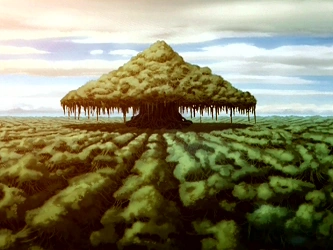
     Upon this idea of connectivity, I'm reminded of one of my favorite shows, "Avatar: the Last Airbender." During one episode of this show, the three main characters find themselves lost in a maze, separated, far from home, stuck in a swamp. They find themselves detached from society and from their relationships fairly easily, until someone comes to their rescue.
    Someone to tell them that home is closer than they had originally thought. That every relationship is connected. That all of their thoughts connect to another. That every bit of the swamp they found themselves in is connected to one central tree: one overarching idea.
    And that connectedness truly boggled my mind.


Tuesday, November 19, 2013

The Seven Deadly Humans

"The world is not created for or about humans."


     Last week, my college was bestowed with the honor of having Stephen Greenblatt as a guest speaker. He focused his lecture on a number ideas from paintings, religion and ancient studies. He covered a range of themes in his speech; however, the above quote was truly what impacted me as an audience member.
    Too often do we as a member of society (or even as an inhabitant on this very planet) forget such a moral. Several creatures and species made Earth their home long before humans had ever occupied even a corner of the Earth. Why do we see ourselves as so important? Why have we placed such a high regard on ourselves, and why have we not done something about it?
    I suppose all of this, like Greenblatt was saying, goes back to the bible. The Seven Deadly Sins exist as a reminder not to fall into such a trap: lust, gluttony, greed, envy, sloth, wrath and pride. An excess of one or more of such sins will ultimately lead to the demise of an individual.
    But what if these sins weren't meant to signal the fate of a single person, but rather society as a whole? What if these sins mirror all human beings and foreshadow what is to come of us as a species? Consumed by such frivolous and silly traits — have we truly begun to believe that the world was created for humans and none else?
    Perhaps this may be true but it is up to us as people to recognize this fact, act on it, and change it. Otherwise, we will all eventually be each of the seven deadly sins.


Tuesday, November 12, 2013

Bridges

   
    For my collage, I decided to create a piece that attempts to capture the essence of time passing. Too often do I find myself with choices on how I should devote the time I am given in my life. What exactly should I be devoting the majority of my time to? Reading? Writing? Socializing? Studying? All of the above? Where do I gather the motivation and inspiration for these choices?
     As those ideas run through my head often, I drew inspiration from them and put them toward my collage. I made the focus of the piece the bridge because it resonates a sense of infinity, that deciding what to do with my time will always be a question I will ask. The bridge also represents an obstacle: that this decision is something I would need to cross if I want to move forward.
     On the left and right of the bridges, I included two different letters: one in golden text and the other in black, each on opposite sides of the bridge. This further goes back to the idea of choice but more so focuses on the notion of inspiration. The gold text represents a clear inspiration that I can draw from: that I know I'm about to spend my time wisely. The black letter, paling in elegance to the gold message, represents the poor decisions I choose to make with my time. Those days where I fall down the rabbit hole of procrastination because of one poor choice to watch a new television show or decide to spend too much time on the Internet.
     But at the end of the bridge, I still spent my time doing something, no matter what it was, hence the clock and the setting sun. There will always be consequences for my actions and my choices, from beginning to end. There will always be a new bridge to cross and a new choice to make with inspiration surrounding me.

Wednesday, November 6, 2013

Adding Connections, Subtracting Independence

     "So we live exclusively in relation to others, and what disappears from our lives is solitude."

     Being alone, since I've moved in to college, has become a rare occurrence. Some may view the idea of solitude as a treat while others see it as a curse.
     William Deresiewicz, a writer who commentates on topics such as higher education and culture authored an article entitled "The End of Solitude," explores society's evolution in connectivity. Deresiewicz emphasizes the importance of technology in this commentary, stating, "The camera has created a culture of celebrity; the computer is creating a culture of connectivity."
     This sense of
     C+O+N+N+E+C+T+I+V+I+T+Y,
     in my eyes, is synonymous to
     D-E-P-E-N-D-E-N-C-Y.
     Why wait for your best friend to text you a "hello" in order to smile for the first time today? Why wait for something interesting to pop up in your YouTube feed before starting a homework assignment? Why rely on others' schedules, quirks and moods in order to carry on with your day?
     The idea of leading a dependent life such as that has always baffled me.
     In the article, Deresiewicz writes,

     "I once asked my students about the place that solitude has in their
     lives. One of them admitted that she finds the prospect of being
     alone so unsettling that she'll sit with a friend even when she has a
     paper to write. Another said, why would anyone want to be alone?"
   
     I could not help but be appalled by such statements from students.
     Does no one cherish their own individual mind anymore? Does no one appreciate themselves anymore? Does anyone take the time to reconnect with themselves and solve any internal qualms?
     Ignoring solitude is synonymous to ignoring yourself and your problems. No conflicts disappear when shrugged off. They'll only fester and become more complicated.
     I love the idea of solitude. Since I began college, I've found myself surrounded by students my age nearly every waking — and even non-waking — moment of my day. It's been difficult to find alone time. Having difficulty finding that solitude drives me insane.
     It's all too much sometimes.
     On those days, I need to take a step back. Step back, evaluate what's going on in my life, and then talk to friends once again.
     We cannot forget who we are.
     In the end, it is truly all that we have.