Tuesday, December 3, 2013

Tapping in Silence

     I've been tapping just about since I learned how to walk. I've learned several other forms of dance such as ballet, jazz, modern, contemporary, hip-hop and lyrical, but tap has always been a favorite of mine, despite the fact that it isn't as popular as it was years ago.
     When I was thinking about composing a song without traditional instruments, for a while, I knew I wanted to work with taps in some sort of way. Beyond that, I was lost. I let the idea sink in over my Thanksgiving break as I relaxed. During my time off, I relived part of my childhood and played "The Legend of Zelda: The Wind Waker." Since I've played this game more times than I can count, as I played this past week, I paid special attention to the music in the game. I always loved and appreciated the soundtrack; however the interaction between the player and the songs became a highlight for me. When the main character struck an enemy with his sword, the music would react: a burst of string instrumentation would play.
    This interaction between player and music truly enhanced the experience of the game, and made the fights much more dangerous and thrilling. But this concept of interactive music was really what fascinated me. Listening to music is usually a passive experience. "Wind Waker" challenged this idea of passivity and it paid off in the long run, making the music more entertaining and adding to the game itself.
     I wanted to recreate this idea of interactive music with the art of tap dancing.
     After much thought, I decided to let my song be the soundtrack or background music for a group of people playing Ninja. There is the basic beat of the person striking the shoes with the taps removed, while there is the contrary metallic sound of the taps whenever a player strikes or gets hit. The piece itself is simple and the listeners will most likely tune it out after a while. In a sense, this song is also a metaphor for tap dancing in modern times: barely alive in mainstream society and something one can ignore fairly easily, yet it is still an interesting and unique form of dance.
     I don't want anyone to forget of tap. I hope this song will do the art justice while conveying the message of an interesting, dying art.


"This is a shoebox. It's also my written composition, written on a forgotten object. It's a simple piece, just to animate the silence of the room ... Use this as background music for a game of Ninja. You may forget the song is playing after a while, and that's okay. Tap is a fading art, a style of dance that is no longer common. Don't let tap fade completely, though. It's still a beautiful art, after all."

Thursday, November 21, 2013

Roots of the Cocoa Bean: Connectivity

     I love chocolate.
     I also love metaphors and writing and connections and making things work when they shouldn't and run-on sentences can be fun sometimes, too. It all depends on where the inspiration stems from and how we choose to use it.
     I just read through a segment of "What to Listen for in the World" by Bruce Adolphe. He touched upon inspiration, the flow of ideas and how certain things, like chocolate, can find their way into everyday inspiration.

"Music can be like chocolate because chocolate can be like music. Poetry is commutative. Knowing this, we can begin to understand the various mysteries by relating them to each other."

    The sort of idea that everything is interconnected and intertwines in an almost poetic way. Even when we least expect it.
    This idea of creativity derived from connectivity is not something I had always thought of throughout my life, and maybe now I will start thinking about it as such. Creativity, after some thought, may just be several ideas floating around in a space. It's up to the creator's imagination to process this information — this swarm of ideas — and organize them into something beautiful.
     That is nothing short of a challenge.
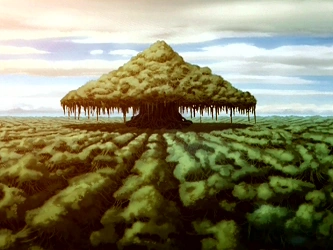
     Upon this idea of connectivity, I'm reminded of one of my favorite shows, "Avatar: the Last Airbender." During one episode of this show, the three main characters find themselves lost in a maze, separated, far from home, stuck in a swamp. They find themselves detached from society and from their relationships fairly easily, until someone comes to their rescue.
    Someone to tell them that home is closer than they had originally thought. That every relationship is connected. That all of their thoughts connect to another. That every bit of the swamp they found themselves in is connected to one central tree: one overarching idea.
    And that connectedness truly boggled my mind.


Tuesday, November 19, 2013

The Seven Deadly Humans

"The world is not created for or about humans."


     Last week, my college was bestowed with the honor of having Stephen Greenblatt as a guest speaker. He focused his lecture on a number ideas from paintings, religion and ancient studies. He covered a range of themes in his speech; however, the above quote was truly what impacted me as an audience member.
    Too often do we as a member of society (or even as an inhabitant on this very planet) forget such a moral. Several creatures and species made Earth their home long before humans had ever occupied even a corner of the Earth. Why do we see ourselves as so important? Why have we placed such a high regard on ourselves, and why have we not done something about it?
    I suppose all of this, like Greenblatt was saying, goes back to the bible. The Seven Deadly Sins exist as a reminder not to fall into such a trap: lust, gluttony, greed, envy, sloth, wrath and pride. An excess of one or more of such sins will ultimately lead to the demise of an individual.
    But what if these sins weren't meant to signal the fate of a single person, but rather society as a whole? What if these sins mirror all human beings and foreshadow what is to come of us as a species? Consumed by such frivolous and silly traits — have we truly begun to believe that the world was created for humans and none else?
    Perhaps this may be true but it is up to us as people to recognize this fact, act on it, and change it. Otherwise, we will all eventually be each of the seven deadly sins.


Tuesday, November 12, 2013

Bridges

   
    For my collage, I decided to create a piece that attempts to capture the essence of time passing. Too often do I find myself with choices on how I should devote the time I am given in my life. What exactly should I be devoting the majority of my time to? Reading? Writing? Socializing? Studying? All of the above? Where do I gather the motivation and inspiration for these choices?
     As those ideas run through my head often, I drew inspiration from them and put them toward my collage. I made the focus of the piece the bridge because it resonates a sense of infinity, that deciding what to do with my time will always be a question I will ask. The bridge also represents an obstacle: that this decision is something I would need to cross if I want to move forward.
     On the left and right of the bridges, I included two different letters: one in golden text and the other in black, each on opposite sides of the bridge. This further goes back to the idea of choice but more so focuses on the notion of inspiration. The gold text represents a clear inspiration that I can draw from: that I know I'm about to spend my time wisely. The black letter, paling in elegance to the gold message, represents the poor decisions I choose to make with my time. Those days where I fall down the rabbit hole of procrastination because of one poor choice to watch a new television show or decide to spend too much time on the Internet.
     But at the end of the bridge, I still spent my time doing something, no matter what it was, hence the clock and the setting sun. There will always be consequences for my actions and my choices, from beginning to end. There will always be a new bridge to cross and a new choice to make with inspiration surrounding me.

Wednesday, November 6, 2013

Adding Connections, Subtracting Independence

     "So we live exclusively in relation to others, and what disappears from our lives is solitude."

     Being alone, since I've moved in to college, has become a rare occurrence. Some may view the idea of solitude as a treat while others see it as a curse.
     William Deresiewicz, a writer who commentates on topics such as higher education and culture authored an article entitled "The End of Solitude," explores society's evolution in connectivity. Deresiewicz emphasizes the importance of technology in this commentary, stating, "The camera has created a culture of celebrity; the computer is creating a culture of connectivity."
     This sense of
     C+O+N+N+E+C+T+I+V+I+T+Y,
     in my eyes, is synonymous to
     D-E-P-E-N-D-E-N-C-Y.
     Why wait for your best friend to text you a "hello" in order to smile for the first time today? Why wait for something interesting to pop up in your YouTube feed before starting a homework assignment? Why rely on others' schedules, quirks and moods in order to carry on with your day?
     The idea of leading a dependent life such as that has always baffled me.
     In the article, Deresiewicz writes,

     "I once asked my students about the place that solitude has in their
     lives. One of them admitted that she finds the prospect of being
     alone so unsettling that she'll sit with a friend even when she has a
     paper to write. Another said, why would anyone want to be alone?"
   
     I could not help but be appalled by such statements from students.
     Does no one cherish their own individual mind anymore? Does no one appreciate themselves anymore? Does anyone take the time to reconnect with themselves and solve any internal qualms?
     Ignoring solitude is synonymous to ignoring yourself and your problems. No conflicts disappear when shrugged off. They'll only fester and become more complicated.
     I love the idea of solitude. Since I began college, I've found myself surrounded by students my age nearly every waking — and even non-waking — moment of my day. It's been difficult to find alone time. Having difficulty finding that solitude drives me insane.
     It's all too much sometimes.
     On those days, I need to take a step back. Step back, evaluate what's going on in my life, and then talk to friends once again.
     We cannot forget who we are.
     In the end, it is truly all that we have.

Tuesday, October 22, 2013

Siding on the Sidelines

    "And we are living in a society where people are not happy with their everyday lives."
     I don't want to contribute to the muck; I don't want to contribute to the lies, the stories and the tales that make people unhappy with their everyday lives. I don't want to take sides.
     It's instances like these when I begin to realize that yes, there are two sides to every story, but it doesn't mean that either of them are true. Both are contrived, twisted and tailored to match the needs of the story teller. This even stumps the audience: the third side.
     "Fires in the Mirror: Crown Heights, Brooklyn and Other Identities" by Anna Deavere Smith follows the true points of views of several black and Islamic residents in Crown Heights during the riots of 1991. This play is in the form of a series of interviews set up as monologues. The story itself is cut and dry: an Hasidic man accidentally hits a young African-American child with his car. This then is the trigger for riots, outbursts and the incident is then used as a reason to justify acts of violence unto the other race.
     The other night, I was able to see a live performance of the play in a black box. The only times I had ever gone to see a play was when the performers were strictly bound to a stage. Being able to have the actors directly interact with the audience was a new and interesting concept for me. While the execution of this play was nearly flawless, I did have some qualms with it. Like the two distinct sides presented in the play, I thought it would be appropriate to examine this play in two distinct sides: the positives and the negatives.


·      I could feel the animosity when he threw props in my direction.

·      I could see the pain she felt when she looked directly at me.
·      I could hear his compassion when he yelled at an audience member.
·      The costumes took me back 20 years.
·      The dialects were well achieved by the actors.
·      I felt like a part of Crown Heights: a member of the community.


·      An intermission was needed.
·      I found myself losing interest at times.
·      Some of the monologues could not hold my attention.
·      There was no third-party opinion to balance out the feuding sides.
·      There was never an absolute resolution at the end of the play, although the director toyed with a possible solution that didn’t necessarily correlate with the dialogue.
   

     If you were to examine each of these bulleted points individually and out of context, you might find yourself taking sides. For example, if you were to only read the negative review, you would probably avoid the play. Likewise if you only read the positive review, you'd most likely be disappointed because of how much you'd expect of the play. Both of these lists represent a one-sided argument. There is no middle ground and no balance.
     Just like the blacks and the jews of Crown Heights.
     It's difficult to pick a side when only given one half of the whole picture. But when you can examine and synthesize both sides — like reading both the positive and negative lists and hearing words from both races in Brooklyn — you can form a more well-rounded opinion on the matter. That's why I loved "Fires in the Mirror" so much: There was the perfect balance of both sides. This balance helped me pick a side.
     The side that allows people to be happy with their everyday lives: no side at all.

Thursday, October 3, 2013

MusiCANs' Importance

            Music hath contain history. 'Tis the pinnacle of representation; thine world hath been encased within such notes. Methinks such a concept is often overlooked.
            How can we show culture to the world? Andrew Ford displayed these feelings and worries in an article for Inside Story. “The arts in general are how we explain ourselves to each other and to future generations,” he explains in his story and I can’t help but full-heartedly agree. How can we show the development of society, its values and its place during a given time period? It’s difficult to portray passion and emotions in a more concrete manner through writing and/or hard facts. Sure, everything is poured onto a paper in a, presumably, poetic way, but can the reader truly understand a feeling or a mood? Punctuation and diction can only go so far.
            For instance, I could write a message to a friend saying, “I obviously fell in love with him instantly.”  Does the “obviously” denote a sense of reassurance, or a sense of sarcasm? Does this mean that I’m infatuated with someone? Does this mean I’m mocking his potential cocky personality? My friend won’t know unless she hears from me directly.
            Key word: “hears.”
            Music not only combines the art of poetry but also the art of writing. Put together, perhaps the clearest image of any thought can be conveyed. It is for this reason that music is such a wonderful representation of history.
            Can you name the presidents of each decade? Probably not, but I’m sure you can list the popular styles of music.
            '20s and '30s: Jazz.
            '40s and '50s: Swing; show tunes.
            '60s: Classic rock
            '70s: Disco
            '80s: Hard rock
            '90s and 00s: Pop; boy bands
            Music is a way of keeping in touch with the past, be it factually or emotionally. This notion of “keeping in touch” with the past only reminds me of Joan Didion’s non-fiction piece "Slouching Towards Bethlehem." In one chapter, she talks about the importance of keeping a notebook. “It all comes back,” she writes. “Perhaps it is difficult to see the value in having one’s self back in that kind of mood, but I do see it; I think we are well advised to keep nodding terms with the people we used to be, whether we find them attractive company or not … It is a good idea, then, to keep in touch.”

            Keeping in touch. Remembering the past and working toward the future. This is what music has taught us over the years. Simple melodies and harmonies will always have a way of finding a poignant moment in history or in our lives. The mood of the lyrics and the instrumentals is far too difficult to ignore. It’s our job to keep in touch with the past, and anyone can do so with the art of music and “… plug in to a form of philosophical discourse.”